Context
Retirement closes an operating decision. It does not always close the evidence record. A delayed vendor file may arrive, an omitted cohort may be reconstructed, or an implementation log may become readable only after the framework has stopped running. That later material can improve the archive, but it also creates a dangerous opportunity to make the old decision look cleaner than it was.
The temptation is understandable. Once the outcome is known, missing observations feel like clerical defects. The researcher fills the gaps, reruns the comparison, and replaces the original summary with a more complete one. The archive becomes numerically stronger and historically weaker because a later evidence set is presented as though it existed at the original decision date.
Validation backfill needs a stricter purpose. It should explain the historical record, measure what the original process failed to capture, and improve future research controls. It should not retroactively increase the confidence attached to a decision that was made with less information.
A useful backfill therefore preserves two records side by side: what was knowable when the framework was retired, and what became knowable later. The distance between them is not noise to erase. It is evidence about the quality of the research process itself.
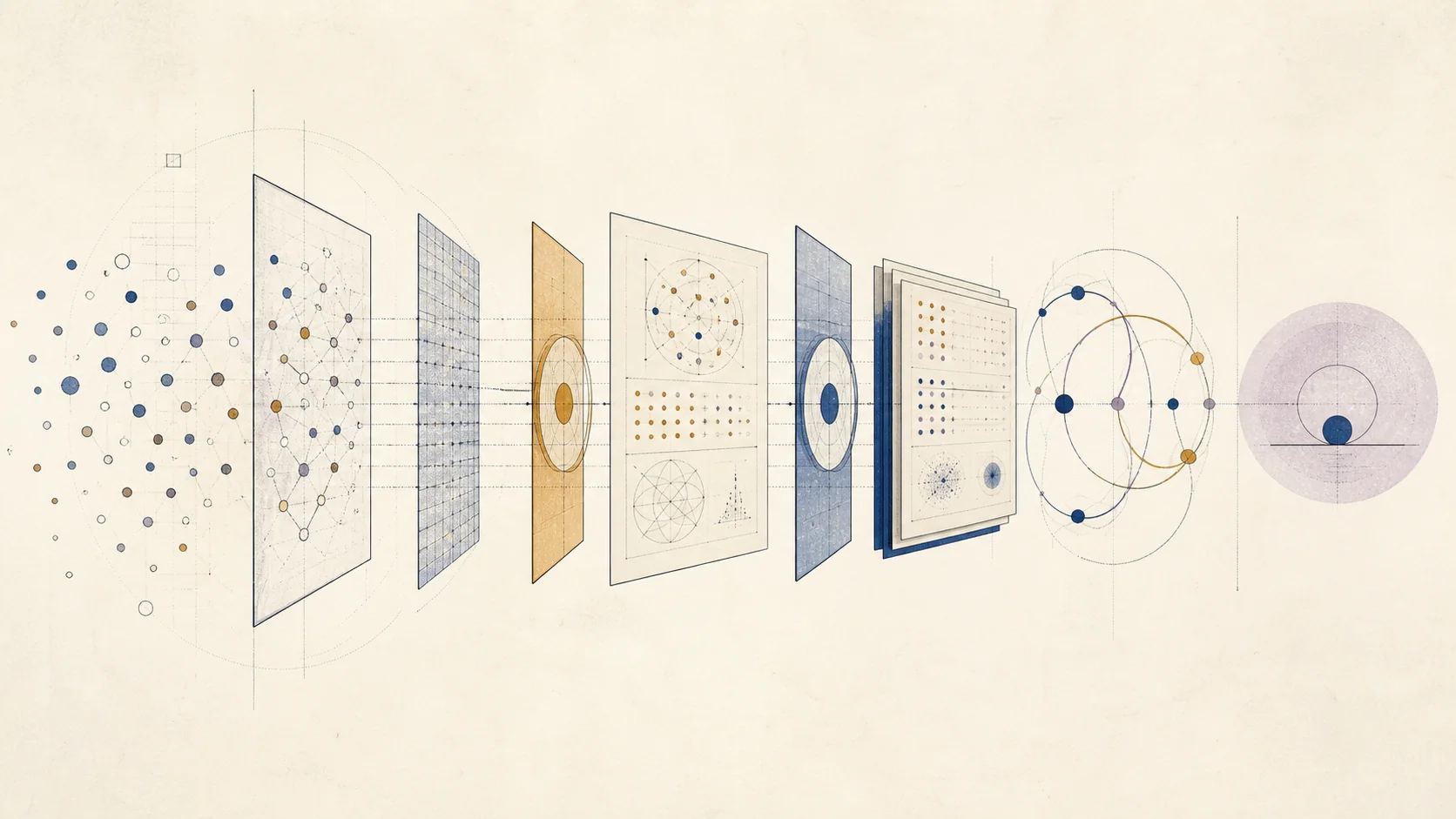
The argument in one path
A compact route through the article's evidence, mechanism, interpretation, and limiting condition.
Observed
01Context
Retirement closes an operating decision. It does not always close the evidence record. A delayed vendor file may arrive, an omitted cohort may be reconstructed, or an implementation log…
Observed
02Backfill Is an Appendix, Not a Replacement
The original retirement packet should be immutable. Its baseline, data cutoff, unresolved questions, owner, and stated reason belong to the decision that actually occurred. A later…
Observed
03Freeze the Original Decision Boundary
Before any reconstruction begins, capture the exact boundary of the retired decision. Name the approved specification, the operating version, the evidence cutoff, the reference cohort,…
Observed
04Use Three Clocks
Every backfilled observation needs more than an event date. It needs an availability date and a reconstruction date. The event date states when the underlying condition occurred. The…
What weakens the path
The first failure is silent replacement. A later, cleaner report overwrites the decision packet and removes evidence of what was missing. The archive becomes easier to read and impossible to audit honestly.
Backfill Is an Appendix, Not a Replacement
The original retirement packet should be immutable. Its baseline, data cutoff, unresolved questions, owner, and stated reason belong to the decision that actually occurred. A later analysis may challenge the interpretation, but it should link to the original record rather than silently revise it.
The backfill belongs in a dated appendix with its own scope. It should say which observations were added, why they were unavailable, which methods were used to reconstruct them, and whether the added evidence changes historical understanding. This creates a visible distinction between contemporaneous evidence and retrospective evidence.
That distinction protects both directions of interpretation. Favorable late evidence cannot be used to claim that the original framework deserved more confidence than it received. Unfavorable late evidence cannot be presented as proof that the earlier owner knowingly ignored a problem that had not yet become observable.
Freeze the Original Decision Boundary
Before any reconstruction begins, capture the exact boundary of the retired decision. Name the approved specification, the operating version, the evidence cutoff, the reference cohort, the comparison rules, and the retirement rationale. If one of those fields is missing, mark it missing rather than inferring a convenient answer from later artifacts.
The frozen boundary answers a simple question: what could a careful reviewer have concluded at that time? The answer may still be uncertain. That uncertainty is part of the historical state and should survive even if later information resolves it.
Versioning matters because a backfill can otherwise evaluate a different object. A repaired data mapping, revised cost estimate, or cleaner universe definition may be appropriate for the retrospective study, but it does not describe the same process that reached retirement. Material reconstruction changes should receive a new analysis version and an explicit comparability note.
Use Three Clocks
Every backfilled observation needs more than an event date. It needs an availability date and a reconstruction date. The event date states when the underlying condition occurred. The availability date states when the research process could first have accessed reliable evidence. The reconstruction date states when the archive actually incorporated it.
Confusing these clocks creates accidental foresight. A field may describe an event that happened before retirement while remaining unavailable until weeks later. Sorting only by event date makes it appear that the earlier reviewer possessed information that the system could not yet retrieve.
The three-clock record also reveals operational delay. If evidence was available but not incorporated, the problem belongs to ingestion, ownership, or review cadence. If it was not available at all, the limitation belongs to the source or the original design. Those are different lessons and require different repairs.
| Clock | Question | Why it matters |
|---|---|---|
| Event date | When did the underlying observation occur? | Places the evidence in the historical sequence. |
| Availability date | When could the process first access reliable evidence? | Prevents later information from being treated as contemporaneous. |
| Reconstruction date | When was the observation added to the archive? | Measures the delay and identifies the responsible research cycle. |
Classify Missingness Before Filling It
A gap is not a single condition. Evidence may be missing because a source did not publish it, the pipeline failed to ingest it, the operating specification intentionally excluded it, or the archive lost the artifact. The category should be assigned before the missing value is reconstructed.
Source-unavailable gaps usually remain limitations. Pipeline gaps may be recoverable from the original source and should produce an operational incident record. Specification exclusions should not be relabeled as accidental missingness; they show what the original framework chose not to observe. Archive-loss gaps raise a provenance problem even if the number can be recovered elsewhere.
The classification changes how much confidence the backfilled result deserves. A value recovered from a signed source file is different from a value approximated from a chart. A cohort rebuilt from immutable membership records is different from one inferred from today's constituents. Both can be useful, but they should not occupy the same evidence tier.
When the reconstruction method cannot preserve the original definition, leave the field unresolved. A visible gap is more honest and often more informative than a precise-looking substitute that changes the analytical object.
Rebuild the Denominator, Not Just the Memorable Rows
Retrospective work naturally begins with the observations that attracted attention: a large move, an obvious failure, or a case that later became important. That is the wrong denominator for validation. The backfill must recover the full eligible cohort under the frozen inclusion rules, including quiet, negative, incomplete, and contradictory records.
If only successful or dramatic paths can be reconstructed, the archive should describe a case review rather than a validation backfill. The label matters because a collection of recoverable examples cannot estimate the behavior of the original process.
Cohort accounting should show the expected population, recovered population, unresolved population, and exclusion reasons. The recovery rate belongs beside every retrospective metric. A result calculated from 92 recovered observations out of 100 expected observations carries a different limitation from the same result calculated from 37 selectively recoverable observations.
A Worked Example
Suppose a framework was retired on June 30 after 100 eligible records had entered its operating window. The retirement packet contained outcomes for 78 records, marked 12 as still maturing, and listed 10 as missing because an external file had not arrived. The decision relied on the 78 observed records plus the known uncertainty around the other 22.
On July 20, the delayed file becomes available. Eight of the ten missing records can be matched exactly; two remain unresolved. The 12 maturing paths can also be completed. A retrospective appendix can now analyze 98 of the original 100 records.
The correct archive keeps the June 30 decision unchanged, then adds a July 20 appendix. It reports the original 78-record evidence set, the 20 recovered outcomes, the two unresolved records, and the effect of the larger cohort on the historical interpretation. It does not replace the original denominator with 98 and imply that the retirement committee saw the completed sample.
If the expanded cohort points toward the same conclusion, the backfill strengthens confidence in the archival interpretation, not in the information available on June 30. If it points elsewhere, the divergence becomes a process finding: the original decision was made under a material information gap that future review rules should prevent or price explicitly.
Do Not Turn Backfill Into Reactivation
A more complete historical result does not automatically reopen a retired framework. Reactivation asks whether a current, versioned process deserves a new operating baseline. Backfill asks what can now be learned about an old process. They have different evidence windows and different decision rights.
If late evidence makes the framework worth studying again, open a new research record. State which elements are inherited, which have changed, and which current observations will be held out for prospective evaluation. The retired name may provide lineage, but it cannot provide current approval.
This separation prevents a favorable retrospective result from bypassing present-day validation. It also protects the backfill from being shaped around the desire to restart the framework. Historical repair and new research should be reviewable independently.
A Minimal Backfill Ledger
The ledger can remain compact. Its purpose is to make the new evidence reproducible and to preserve the boundary between the old decision and the later interpretation.
Validation Backfill Checklist
- Link the immutable retirement packet and name its evidence cutoff.
- Record event, availability, and reconstruction dates separately.
- Classify why each observation was missing before reconstructing it.
- Preserve source files, transformation steps, and analysis version.
- Report expected, recovered, unresolved, and excluded cohort counts.
- Show the original and expanded interpretations side by side.
- State which conclusions are historical, which are process findings, and which remain unresolved.
- Require a new evidence chain for any future reactivation.
Common Failure Modes
The first failure is silent replacement. A later, cleaner report overwrites the decision packet and removes evidence of what was missing. The archive becomes easier to read and impossible to audit honestly.
The second is recovered-winner bias. Memorable favorable cases are easier to locate, so the retrospective sample becomes more attractive than the original eligible population. A recovery ledger and explicit denominator prevent examples from masquerading as validation.
The third is clock collapse. Evidence is placed at its event date without preserving when it became available. The timeline then grants the original process information it did not possess.
The fourth is reactivation by narrative. A favorable appendix is used to restore confidence in the old name without validating the current implementation, opportunity set, costs, and data dependencies. Archival learning becomes an unauthorized operating decision.
Takeaway
Validation backfill is valuable when it makes the archive more complete without making the past more convenient. Freeze the original decision, preserve all three clocks, classify missingness, reconstruct the full denominator, and show the old and new interpretations together.
Late evidence can change what the organization learns from a retired framework. It cannot change what the original reviewer knew. That boundary is the difference between historical research and retrospective rewriting.
A strong archive does not pretend that every gap was avoidable. It makes each gap visible enough that the next research cycle can decide whether to repair the source, the pipeline, the specification, or the review process.